Travelling to India from the UK? At India Someday, we help you plan the ideal trip according to your requirements. In this article, we offer extensive guidance on Indian Visa, vaccinations, flights, and more for British citizens.

VISA
While travelling to India from the UK, you will need a visa or an e-visa. There are a number of visa categories in India. Ensure the right visa according to the purpose and duration of your visit.
If you are a UK passport holder applying for a tourist visa, you can simply apply for an e tourist visa. At India Someday, we can help you apply for the same. Tourist e-visa for UK citizens in India is available for thirty days, for one year and for five years duration. The cost for Indian visa for UK citizens depends on the type of visa. A tourist visa for a duration up to one year costs GBP 116, while a tourist e-visa for up to one year costs GBP 31.69.
For more information on this, see our blog post regarding eVisas.
If you are a British citizen of Pakistani origin, you will need to apply for an Indian tourist visa on a Pakistan passport. If you have renounced or cancelled your Pakistani passport, you will need to submit proof of the same. Keep in mind that this process will take much longer than other visa application processes.
For more information about obtaining an Indian visa for UK citizens, check your government’s website for further details.

VACCINations for India
While the UK doesn’t enforce any inoculations or medication for individuals travelling to India, some are strongly recommended, especially for at-risk individuals.
Boosters and courses that are usually advised are Diptheria, Hepatitis A, Hepatitis B, Tetanus and Typhoid. Vaccines that are advised in some cases are Cholera, Japanese Encephalitis and Rabies. For some areas, it is advised to carry anti-malarial pills.
If you’re on any prescription drugs, carry a sufficient amount to last you the trip, along with the prescription for them as well. Make sure you know the generic names of these drugs in case you need to restock with local equivalents.
While in India, stick to bottled or filtered water, and eat hot and well-cooked food.
At least eight weeks before your trip, be sure to check with your GP, nurse, travel clinic, or healthcare professional for any information and the latest updates on any vaccinations and certificates that you may need. For more information, visit www.fitfortravel.nhs.uk

FLIGHTS and customs
UK passport holders can fly to Delhi, Mumbai, Goa, or Chennai from most major airports in the UK. Airfares skyrocket in June and July, so travel between September and March for cheaper flights.
There are strict rules in place about goods that can be brought in or taken out of India.
Possession and operation of satellite phones without a license is illegal in India. You will also need prior permission from the Indian authorities to bring equipment like listening or recording devices, radio transmitters, drones, powerful cameras, or binoculars into India.
There are also restrictions on bringing Indian money into India. Visitors and tourists cannot bring any amount of Indian currency into the country. If you are an Indian resident, you are allowed to bring up to INR 25,000 into the country.
If you are visiting India, you need to bring cash in pounds, travellers’ cheques, or a bank card and exchange or withdraw Indian rupees once you are in india.

SEASONS
Expect an extreme change in climate while travelling to India from the UK. With the exception of some parts in North India, India is widely a warm, tropical country. Indian summers begin in March and last until mid June. Temperatures can reach up to 45 degrees celsius. The intense heat is accompanied by high humidity and UV levels. For more information about Indian climate depending on the time of year, visit our blog posts regarding weather in India during different seasons.
Discover More: Learn About the Optimal Time to Explore India’s Beauty
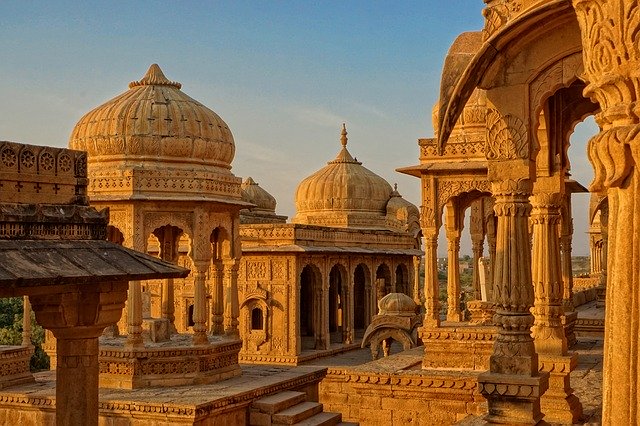 Bada Bagh in Jaisalmer!
cultural differences
While travelling to India from the UK, consider the fact that there is a huge difference in customs and traditions in both the countries. We suggest to always try to be modest, courteous, and conscious of your behaviour.
- It is important to remove your shoes before entering a home, a temple, or some stores, especially if you see others doing the same.
- When visiting places of religious significance, it is important to dress conservatively and to be mindful and respectful of local sentiments.
- Laws on decency are open to interpretation, so it is important to be careful about engaging in public displays of affection.
- Feet are considered as unclean by many. Be sure to always apologise if you step on something, or accidentally touch someone with your feet.
- Lack of personal space is common in India, do not be offended if people openly stare, or brush up against you in crowds or in a hurry. However, avoid crowded places if it makes you uncomfortable. If you feel unsafe, go to the police for help.
- English language is widely spoken in India, but it may be difficult to understand at first. Indian-English has its own rich, hybrid flavour borrowed from local languages.
- Smoking in public is illegal in India, though you’re likely to see everyone doing it. Just be aware that the law exists in case you’re questioned.

WHERE SHOULD I TRAVEL IN INDIA?
India is a huge, incredible and a fascinating country with a myriad of interesting experiences to do and see.
From the mighty Himalayas in the North, to the architectural wonder Taj Mahal in Agra, the deserts of Rajasthan and the beaches of Goa, there is so much to explore in India! Most travellers get flummoxed while planning a trip to India.
We would recommend a minimum of 14-day trip, especially if it is your first time here. This way, you can properly explore one or two regions in the country.
We have a wide variety of sample routes that may give you inspiration. If you have something else in mind, do not hesitate to contact us with your queries, and we will sort everything for you!

THINGS TO KEEP IN MIND while travelling to India from the uk
If you plan well and do enough research, travelling to India from the UK is not too difficult. No matter where you go, you need to prepare yourself for all kinds of possibilities, such as travel delays, illnesses, lost baggage, or insufficient funds.
Here are some important things to keep in mind while planning your trip to India from the UK.
Visa and passport formalities
Keep your travel documents in place before you visit India. UK passport holders need a tourist visa to travel to India, so apply online starting three months prior to your visit up to four days before. UK passports can get the Indian e-visa, and we can help you with the same.
Whether you are a UK citizen or EU citizen, your passport should be valid for at least six months, so make your travel plans accordingly. Travellers must double-check visa requirements and latest updates for the country they are visiting before they embark on the journey.
Always keep copies of all your documents, e-visa, and passport photos, in case you misplace the originals.
Illnesses
If you are not attuned to the change in climatic conditions, there may be an increased risk of health problems,especially where a medical facility may not be readily available. Pack essential medicines and consult your doctor for vaccines and health advice before your trip.
Common health risks that UK nationals should be mindful of include food-related illnesses and mosquito-borne diseases.
Drink bottled water, avoid ice and opt for cooked foods. This way you are safe from raw or contaminated food, which you are likely not to digest. Apply mosquito repellent and wear protective clothing. Face masks can help protect you from pollution. It is an essential travel item in india.
You need to stay healthy in order to truly enjoy exploring India. If you feel unwell, seek medical treatment promptly. Travel insurance is a must.
Food & Water Safety
When in India, you have to try the country’s diverse and delectable cuisine. But local food also means an increased risk of stomach problems. Some advice we can give you is to opt for hot, freshly cooked meals in good, well-known restaurants. Eating at local, less fancy restaurants offer higher risk of ingestion and stomach problems. Avoid street food unless it’s cooked right in front of you. Drink bottled or boiled water and use the same for brushing teeth. Be cautious with raw vegetables and fruits – peel them yourself so that you are ensuring you don’t eat contaminated food. Hand sanitizer and practising good hygiene will ensure low risk of infections, allergies or stomach problems. Your taste buds will thank you!
For the Adventurers
North India offers breathtaking locations for hikes in places like Himachal Pradesh and Uttarakhand. If you are planning an adventure trip or a trek, make sure you pack appropriate gear for the changing weather and challenging terrains. Be sure to check weather forecasts before starting a trek and keep someone informed about your plans.
Acclimatise to high altitudes to prevent acute motion sickness. Respect nature and the local customs – leave no trace and take no risk.

Frequently Asked Questions

About Aishwarya Shete
Aishwarya Shete is a content writer at India Someday. Her passions are writing, photography, and more importantly, food. She hopes to travel the world someday and document it through her pictures and words.
helping you travel your way
Everything you need to know about India is here We have tried writing about everything you may need help with for your trip to India, If you need help in planning a trip to India Get in touch with us to to plan your trip of a life time.